

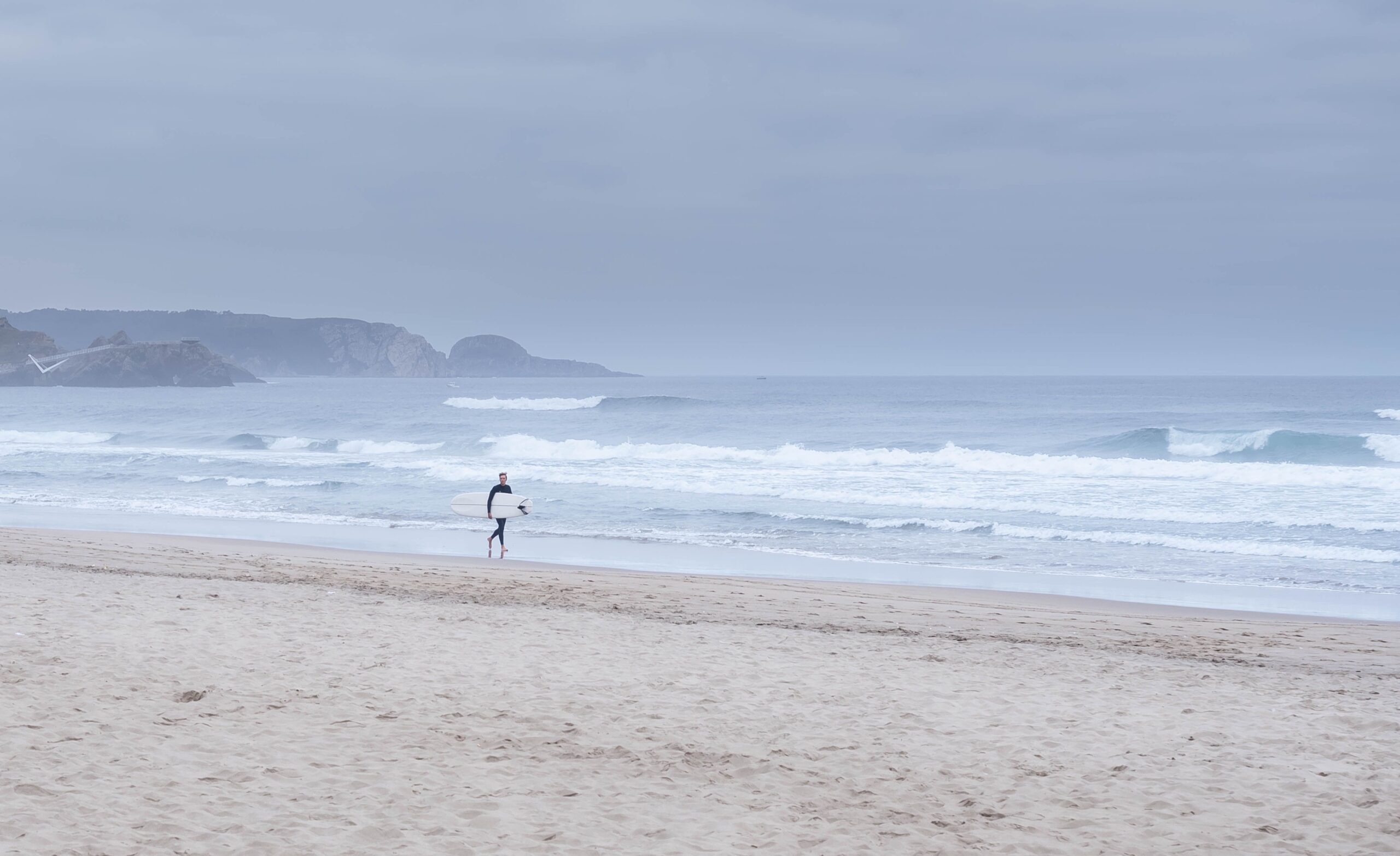
For most of the first year, I treated Spain and Portugal as a series of departures.
I arrived somewhere, found a bed, checked the forecast and worked out how long I could stay before moving on. Galicia led to Portugal. Ericeira led to Peniche and later there were Lisbon, the Algarve, Nazaré and another visit to Mundaka. Even when I stayed somewhere for several weeks, part of my attention was already on the next place.
That suited me at the beginning. I had come to surf and learning Spanish was something I expected to happen around the edges. A few words in a café, a conversation in a surf shop and perhaps enough vocabulary to avoid getting on the wrong bus.
The longer I stayed, the less well that arrangement worked.
Moving regularly is exciting until every ordinary task becomes temporary. You learn which supermarket is nearby, then leave. You find somewhere that makes decent coffee without charging tourist prices, then begin searching again in another town. Half your belongings never come out of the bag because packing them properly would suggest a level of commitment you don’t have.
Surfing fitted neatly into that life. There was always another forecast to check and another coast that might be working better. A disappointing session could be blamed on timing or location. Moving on allowed me to believe the next place would solve it.
Language was less cooperative.
Spanish improved slowly because I kept encountering different people, but most conversations were brief. I could order food and ask simple questions. If the answer became complicated, I smiled, took what I thought was the important part and carried on. Nobody was going to see me again two days later and ask whether I had understood.
Classes changed that. So did staying in Barcelona long enough for familiar faces to appear in familiar places. The same waiter who had watched me struggle with an order one week was there when I tried again the next. People remembered which words I didn’t know. I couldn’t reset the conversation by moving to another town.
That was uncomfortable, but useful.
The bigger change came when I stopped living in hostels and rented somewhere for a few weeks. My apartment with the sea view and the broken window was hardly a grand commitment to life in Spain. It did give me an address, a desk and a reason to understand what somebody was saying about a repair.
Once I had somewhere to return to, surfing changed as well.
I didn’t need every session to justify the journey. If the forecast was poor, I could wait. If I paddled out and found very little worth riding, it was an ordinary bad day rather than evidence that I had chosen the wrong place. The board could stay where it was until conditions improved.
This sounds obvious. It wasn’t obvious while I was travelling. Travelling turns decisions into part of the entertainment. Where next? How long? Which coast? There is always a possibility that somewhere else is better, and checking becomes almost as absorbing as surfing.
Staying put removes some of that. It also leaves more room for the days between the memorable ones.
Those days don’t make especially dramatic stories. I studied, shopped for food and spent too long trying to understand letters that arrived at the apartment. Sometimes I went to the beach without taking the board. I learnt more Spanish from dealing with ordinary problems than I had from rehearsing imaginary conversations in class.
I still checked the surf forecast too often.
The difference was that I no longer packed my bag every time another part of the coast showed a little more promise. Most of my clothes finally made it into a cupboard. The board remained beside the wall near the balcony door, ready for a morning when the local conditions were worth the short journey.