

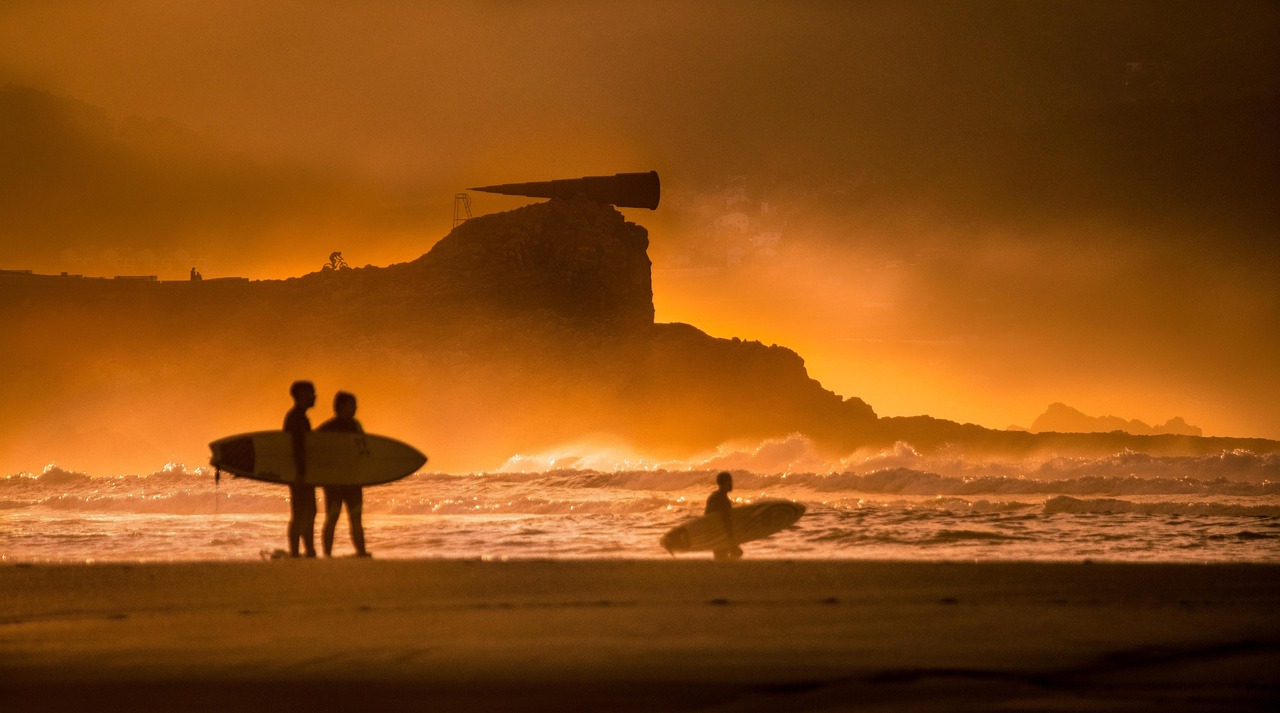
I didn’t come to Spain with a plan to learn Spanish properly. I came with a board, a vague idea that immersion would do the work for me, and the confidence of someone who didn’t yet know how stupid they were about to sound.
Surfing, it turns out, is where that confidence gets stripped fastest.
Not in the water. On the beach.
Because paddling out is universal. Talking about where you should paddle out is not.
The first time someone asked me something that clearly mattered, I nodded, smiled, and went the wrong way. They didn’t shout. They didn’t laugh. They just watched me drift into a mess of whitewater like it was a lesson I needed.
So this isn’t classroom Spanish. This is the stuff you hear standing barefoot on cold sand, holding a board you’re pretending you’re comfortable with.
The absolute basics
You can survive a whole surf trip with very little Spanish, but this is the minimum where people stop switching to English out of pity.
ola
wave
tabla
board
mar
sea
pico
peak
marea
tide
corriente
current
derecha
right
izquierda
left
grande
big
pequeño
small
If you only learn ten words, make it these. Everything else is decoration.
Phrases you will hear before you can understand them
This is the frustrating bit. People don’t speak slowly when the surf is up.
¿Dónde está el pico hoy?
Where’s the peak today?
Está mejor a la derecha.
It’s better on the right.
Hay mucha corriente.
There’s a strong current.
Entra más grande esta tarde.
It’s coming in bigger this afternoon.
¿Remas o esperas?
Are you paddling or waiting?
I heard all of these dozens of times before I knew what they meant. You don’t need to answer perfectly. You just need to not answer wrong.
The dangerous yes
Sí is the most dangerous word in surf Spanish.
Someone asks you something. You catch one word. You say sí. Suddenly you’ve agreed to paddle into a section you absolutely did not mean to.
If you’re unsure, this works better:
No estoy seguro.
I’m not sure.
Todavía estoy aprendiendo.
I’m still learning.
People relax instantly when you say that. They slow down. They point. They become human again.
Surf shop Spanish
This one comes up more than you expect.
Cera
wax
Invento
leash
Quilla
fin
¿Tienes cera para agua fría?
Do you have cold water wax?
Se me ha roto el invento.
My leash broke.
I once mimed a snapping noise for a full minute before learning roto. The guy behind the counter let me suffer, which felt fair.
Lineup Spanish, the polite version
Spanish surf culture is generally relaxed, but words still matter.
Perdón
Sorry
Buena ola
Nice wave
Gracias
Thanks
No te he visto
I didn’t see you
That last one saves arguments. Use it even if you did see them.
How I actually learned this
Not from apps. Not from notebooks.
From hearing the same phrases over and over until my brain stopped panicking. From asking one question badly, then asking it slightly less badly the next time. From being corrected without ceremony.
Surfing forces repetition. Same beach. Same tide talk. Same rhythm. Language sticks when it’s tied to embarrassment.
A small challenge if you’re here
Next time you’re on the beach, don’t translate everything in your head. Just pick one word.
Pico.
Corriente.
Derecha.
Listen for it. Wait for it. When you hear it, you’ll feel it click in place.
That’s how this works. Slowly. Sideways. Like learning to read the sea.
And yes, you will still nod at the wrong moment sometimes.
That’s part of it too.